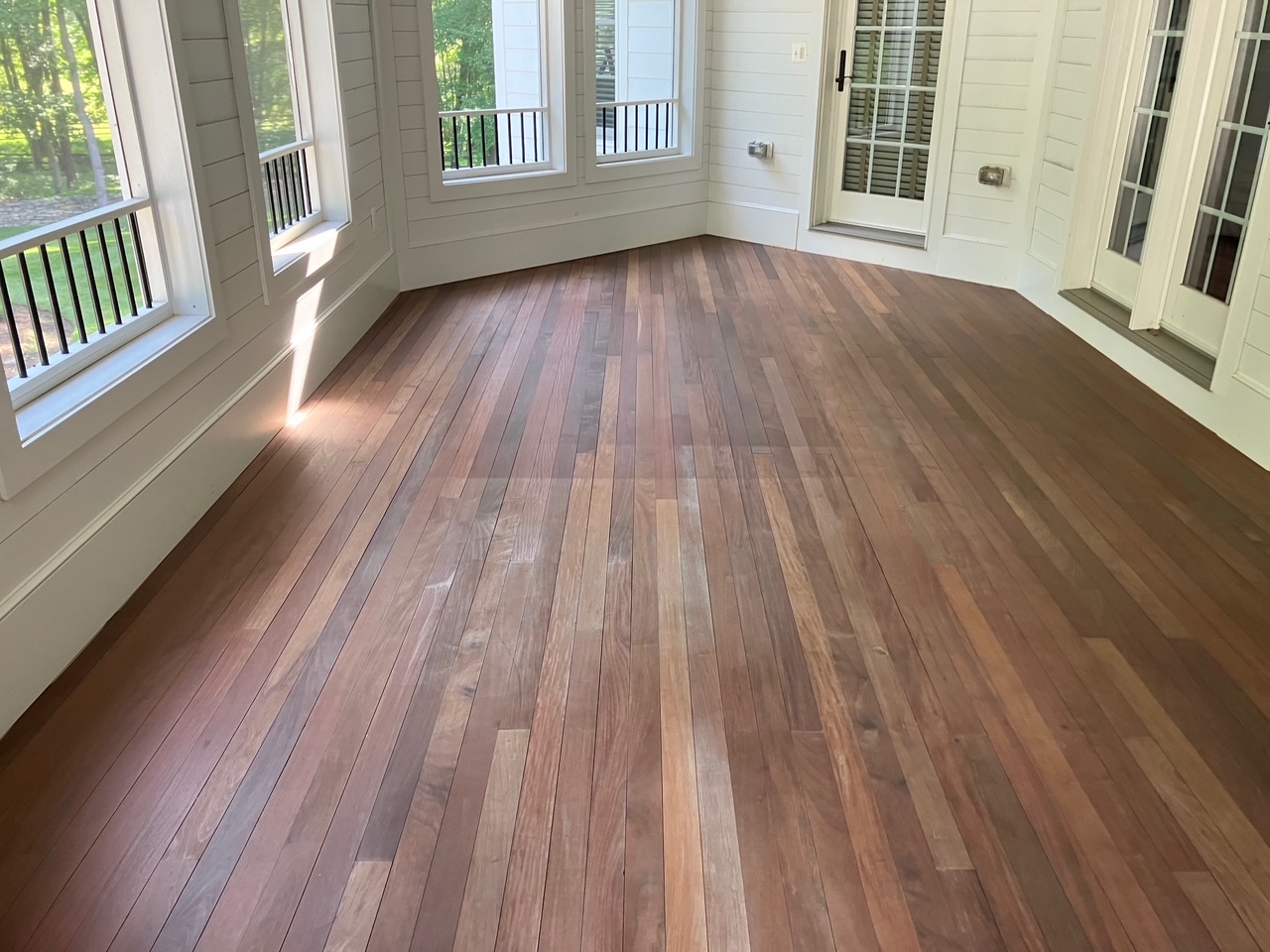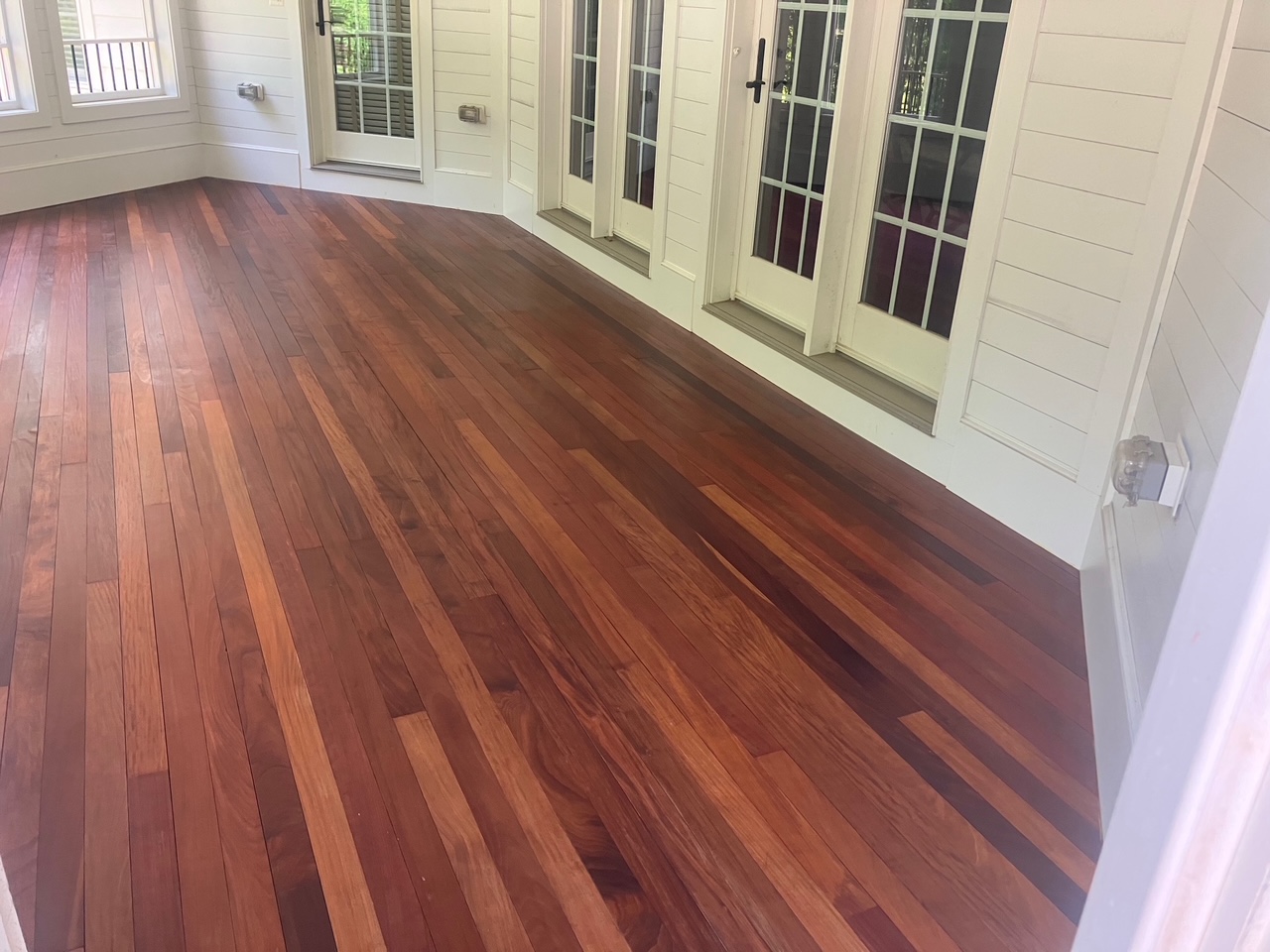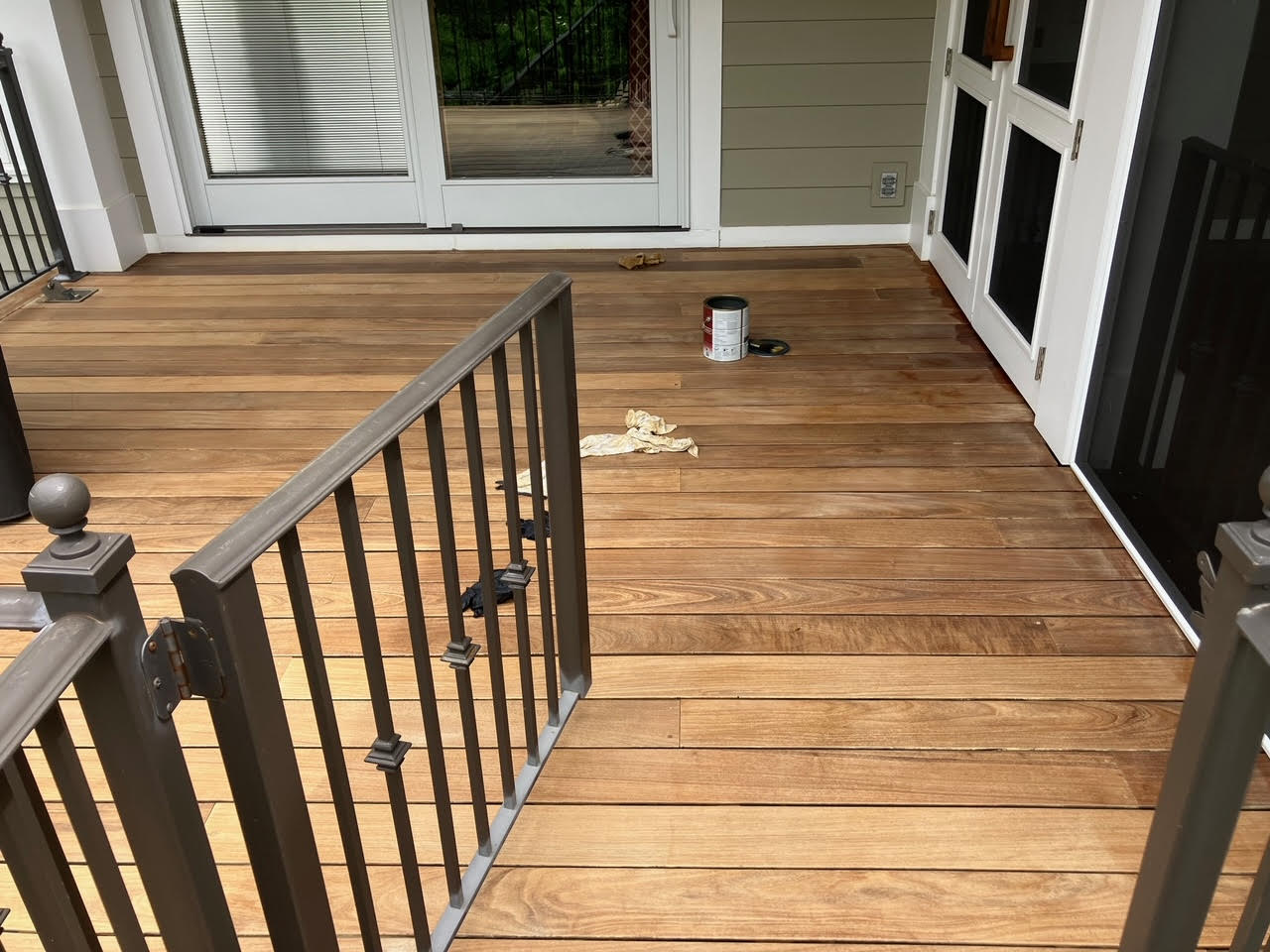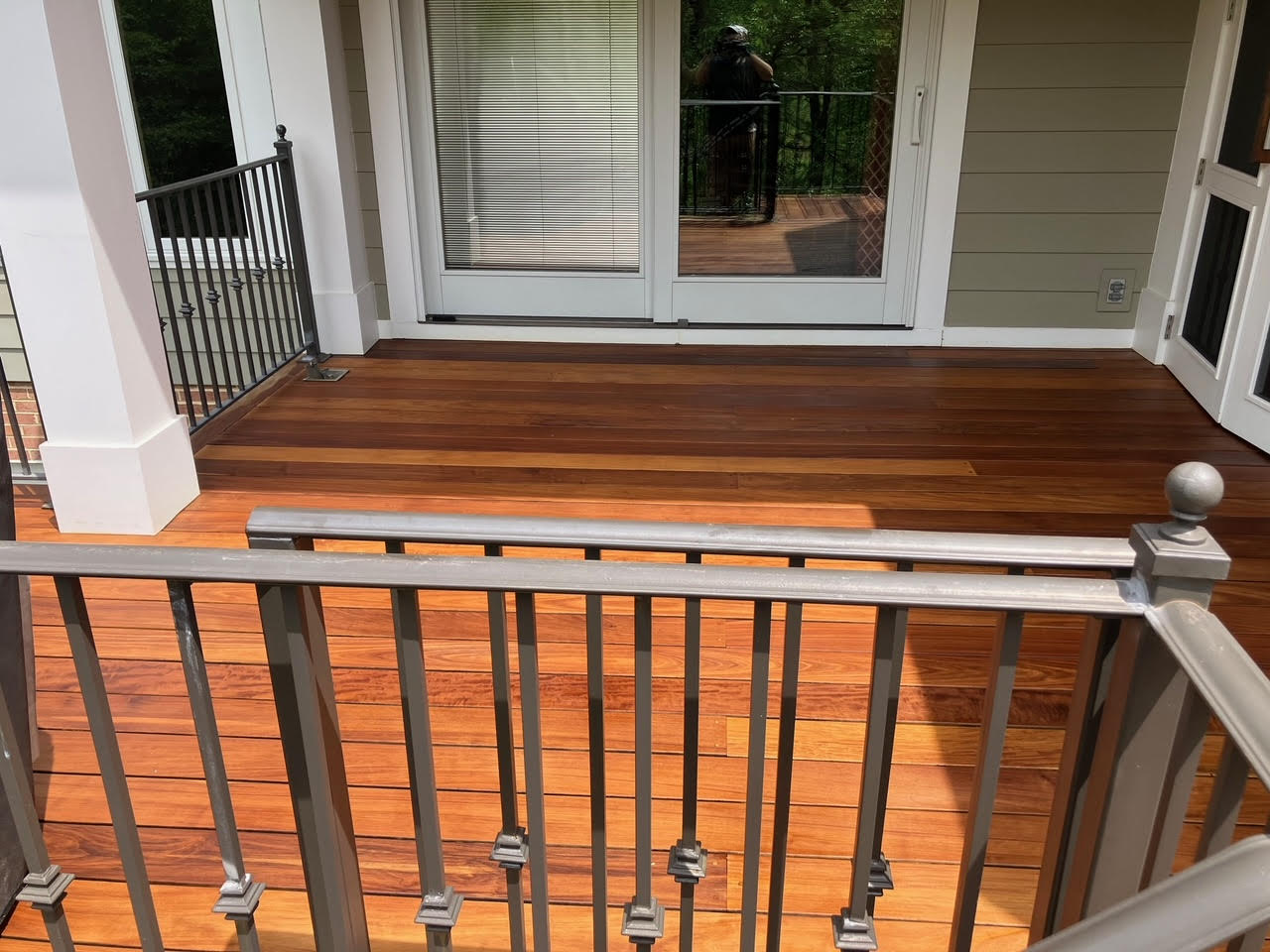


Ipe deck care is very different from maintaining pressure treated lumber. Exotic hardwood species like ipe, mahogany, and ironwood are incredibly dense and durable, but that strength also means they require specialized cleaning and finishing techniques.
Across Ashburn, Herndon, and Loudoun County, exotic hardwood decks have become increasingly popular. Their rich color and tight grain often resemble interior hardwood flooring placed outdoors.
However, treating these decks like ordinary lumber is one of the biggest mistakes contractors make.
Improper maintenance often leads to:
Blotchy finishes
Premature stain failure
Uneven color fading
Extra restoration costs
According to research from the USDA Forest Products Laboratory, tropical hardwoods like ipe are among the densest woods used in construction, which explains why they react differently to traditional stains and cleaning methods.
A recent project in Northern Virginia demonstrates how proper maintenance restores the beauty of these decks.
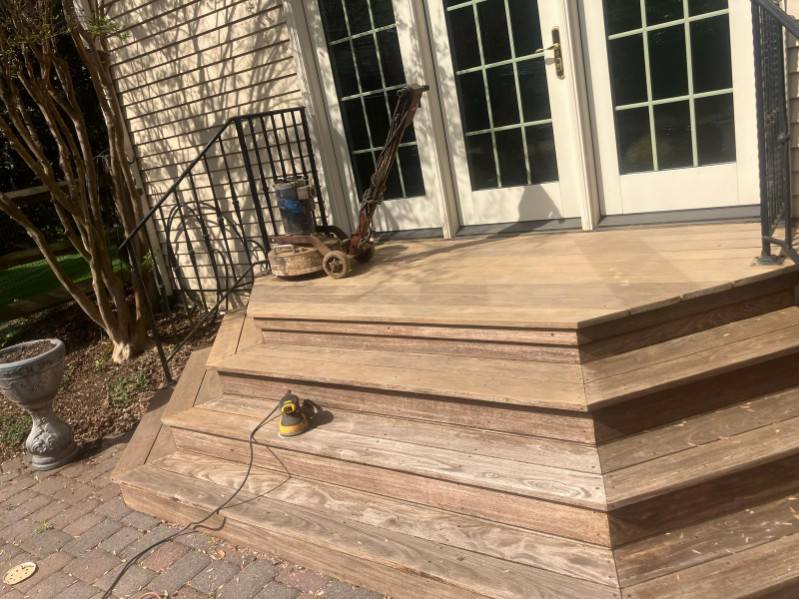
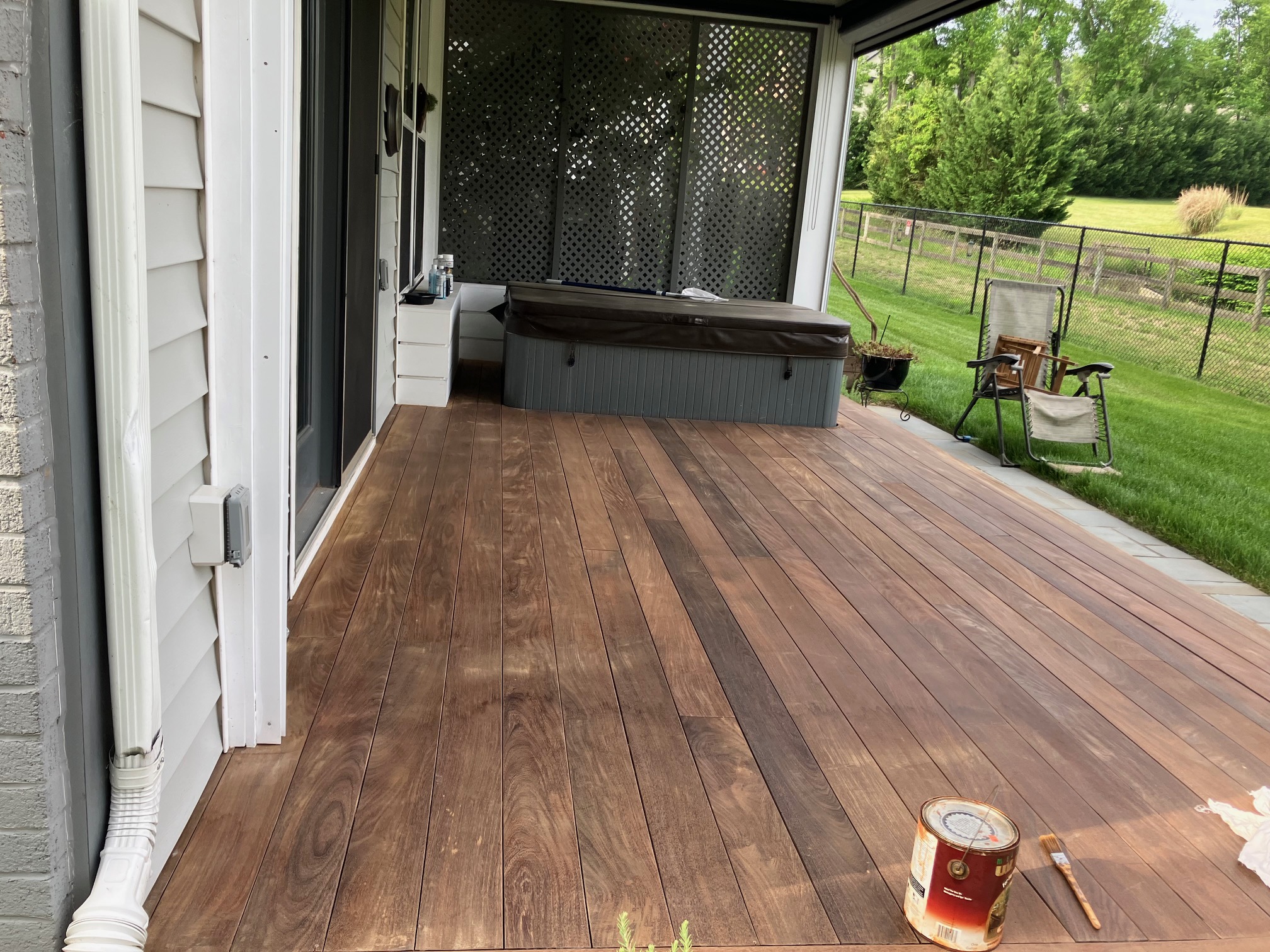
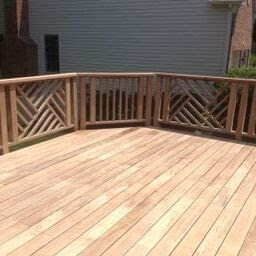
The homeowner had a large ipe deck that had gradually turned gray from UV exposure and weather. Structurally the deck was still excellent, but the appearance had faded.
The homeowner requested a free evaluation through WashMyDeck.
The process was designed to be simple:
Request submitted online through
https://washmydeck.com
Technician visited within 1–3 business days
No appointment required
Homeowner did not need to be present
Measurements and condition notes were taken
After the inspection, the estimate and restoration plan were emailed the following day. This streamlined system helps homeowners throughout Northern Virginia receive professional assessments without scheduling complications.
If you’re researching exotic hardwood deck maintenance, you can learn more about their service process here:
The biggest technical challenge with exotic hardwood is its density.
Unlike softwood decks that absorb coatings easily, ipe behaves almost like a sealed surface. Many big box stains simply sit on top of the wood rather than penetrating it.
Common products from brands such as Behr, Cabot, or Olympic often struggle to bond correctly with hardwood decking.
When the wrong product is used, the results are predictable:
Sticky finish residue
Peeling coatings
Uneven color patches
Accelerated maintenance cycles
Professional restoration instead relies on penetrating hardwood oils specifically designed for dense tropical woods.
For technical guidance on hardwood finishes, resources from the Forest Products Society explain why penetrating oils work better than film forming coatings for hardwood decking.
Proper ipe deck cleaning begins with a controlled washing method.
While many contractors rely on high pressure washing, excessive pressure can permanently damage hardwood fibers. Experienced technicians instead use:
Low pressure washing techniques
Specialized wood cleaners
Controlled dwell times
Gentle rinsing
Once cleaning removes organic growth and oxidation, the surface is lightly sanded.
This step is important because it:
Evens the deck’s tone
Removes minor surface roughness
Allows penetrating oil to absorb more evenly
Timing is critical. After washing, hardwood can begin graying again within days due to oxidation. For that reason, professionals coordinate washing, sanding, and oiling closely.
Weather plays a surprisingly large role in exotic hardwood restoration.
Oil finishes require stable conditions to cure properly.
Important environmental factors include:
Several rain free days
Moderate temperatures
Avoiding heavy pollen periods
Preventing leaves or debris from sticking to fresh oil
In Northern Virginia, spring pollen can be particularly challenging. During peak pollen weeks, staining work is often delayed until conditions improve.
Preparation steps like cleaning and sanding can still proceed beforehand, ensuring the deck is ready once weather allows finishing.
Another misunderstood aspect of ipe deck care is how long the finish lasts.
Penetrating oils protect the wood while enhancing its natural color. However, unlike thick stains, these oils gradually fade under sunlight rather than peeling.
Most exotic hardwood decks require maintenance roughly every 12 months depending on sun exposure.
Benefits of this maintenance approach include:
No peeling or flaking finishes
Easier annual recoating
More consistent appearance over time
This approach keeps decks looking rich and natural instead of allowing finishes to deteriorate dramatically.
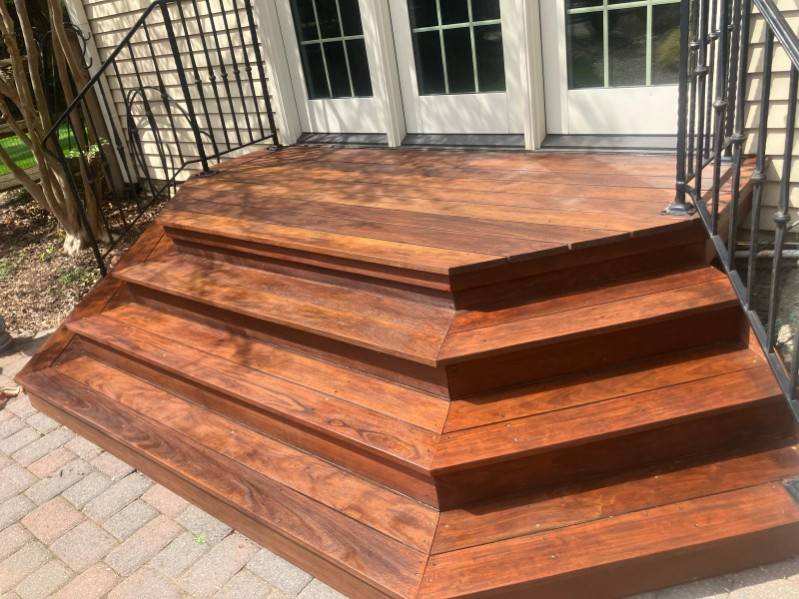
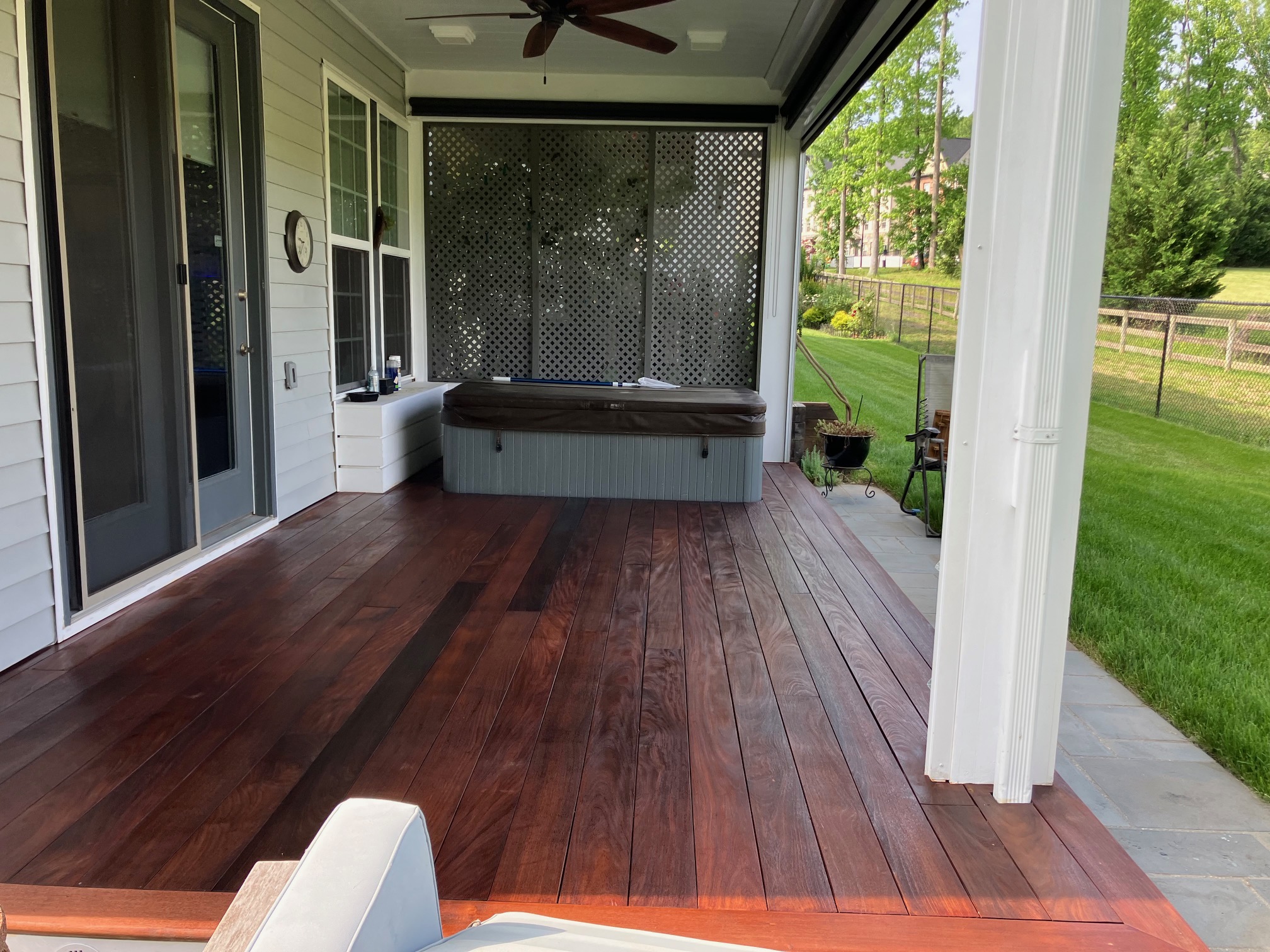
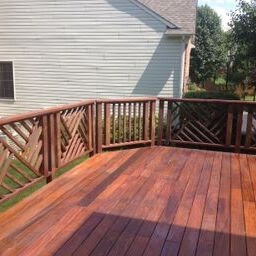
Once cleaning, sanding, and oiling were completed, the transformation was striking.
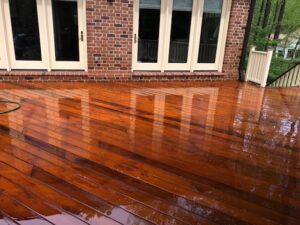
The deck’s deep brown tones returned, the natural grain contrast became visible again, and the wood regained its signature luster.
When properly restored, exotic hardwood decks often look nearly new.
If you live in Northern Virginia and own an exotic hardwood deck, working with Northern Virginia deck specialists can make the difference between short term fixes and long lasting results.
To learn more about professional restoration services or request an evaluation, visit: